

How AI Is Changing the Way Insurance Brokers in India Sell and Service Health Plans
Procedure-by-procedure breakdown of what group OPD dental plans actually cover, and why each category is structured the way it is.

.svg)


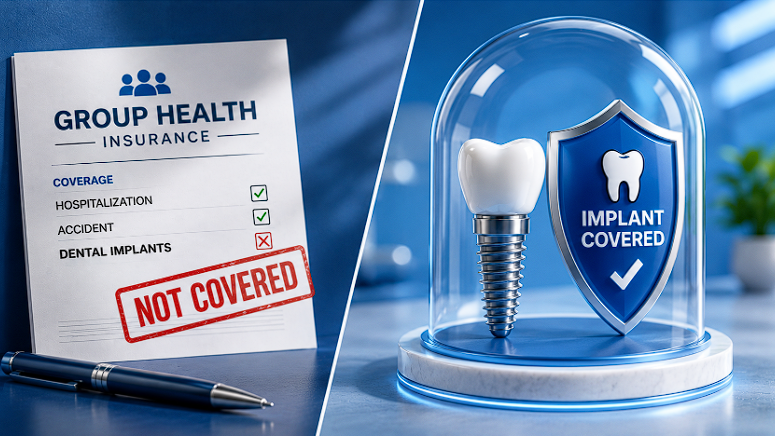
If you work in HR, you have probably fielded this question at least once. An employee is midway through an implant consultation, the treatment plan quotes anywhere between Rs 25,000 and Rs 50,000 per tooth, and they want to know one thing: will the company's group health insurance pay for it?
The honest answer, in most Indian group policies, is no. Not because dental health doesn't matter to insurers, but because of how hospitalization based mediclaim is structured. Here is exactly why implants fall outside standard coverage, the two situations where they might not, and what a growing number of employers are doing about it instead.
Group health insurance in India is built around one core event: hospitalization. Most corporate policies require an in-patient admission of at least 24 hours before a claim becomes payable. Dental implant treatment does not fit that structure. It is an outpatient procedure performed in a dental clinic, usually across two or three sittings spread over a few months. No admission, no claim.
There is a second barrier. Even when a policy mentions dental care, insurers typically classify implants, dentures, and other prosthetic work as cosmetic or elective treatment. Cosmetic procedures sit squarely in the standard exclusions list of nearly every group mediclaim policy in the country. The classification is debatable, since replacing a missing tooth restores chewing function and prevents bone loss, but it remains the industry norm.
There are two situations where a group policy might respond.
So when an employee asks whether the group policy covers their implant, the accurate response in most organisations is: not unless it follows a hospitalized accident.
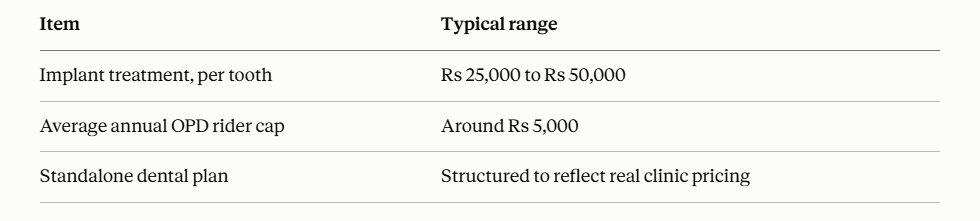
This is not a fringe issue. A 2026 systematic review by Karuveettil et al. estimates that fewer than 15 percent of Indians have any form of dental insurance, and that nearly one in five households seeking dental care faces catastrophic expenditure (spending 20% or more of income) because of it. Your employees are paying for major dental work entirely out of pocket, and implants sit at the expensive end of that spectrum.
The Employee Experience Problem
The awkward part lands on HR. Employees discover the exclusion only when they need the treatment. From their side, it feels like a broken promise: the company gave them health insurance, and health surely includes teeth. Explaining the hospitalization clause does not make the disappointment go away.
The Benefits Perception Problem
Over time, these moments chip away at how the overall benefits package is perceived, no matter how strong the base policy is. Enhancing the group mediclaim itself is rarely the fix. Adding meaningful dental coverage to a hospitalization policy either inflates the premium for the entire workforce or delivers token OPD limits that employees see through quickly.
A growing number of Indian employers are solving this differently. Instead of stretching the group health policy, they add a dedicated dental plan alongside it. The two products do different jobs. The mediclaim handles hospitalization. The dental plan handles the dentist's chair, which is where oral health actually happens.
A well-designed standalone dental plan covers preventive care, restorative work, and major procedures such as root canals and implants, at claim limits that reflect real clinic pricing. Because it is purpose-built, it avoids the waiting periods and cosmetic exclusions that make dental claims frustrating under general health policies. The better plans also work on a cashless basis through partner clinic networks, so employees are treated without paying upfront and chasing reimbursements later.
There is a budget angle too. Dental plans can be structured as a voluntary benefit, where interested employees opt in and contribute towards the premium. HR gets to expand the benefits menu without expanding the benefits budget, and the coverage goes to the people who actually want it. For a benefit that employees can use more than once a year, that is a strong trade.
This is exactly the gap ToothLens closes. Our plans cover implant treatment along with root canals, crowns, extractions, and preventive care, work cashless across our partner clinic network, and can run as a voluntary benefit alongside your existing group policy. If implant questions keep landing in your inbox, talk to ToothLens about giving your team an answer they will like.