Home Blog
Running a Corporate Dental Camp That Actually Drives Utilisation: An HR Planning Guide
Dental care sits outside almost every corporate health benefit in India. Most group health policies leave routine dental treatment out, and standalone dental insurance is still rare. So employees pay out of pocket, put off check-ups, and see a dentist only when something hurts.
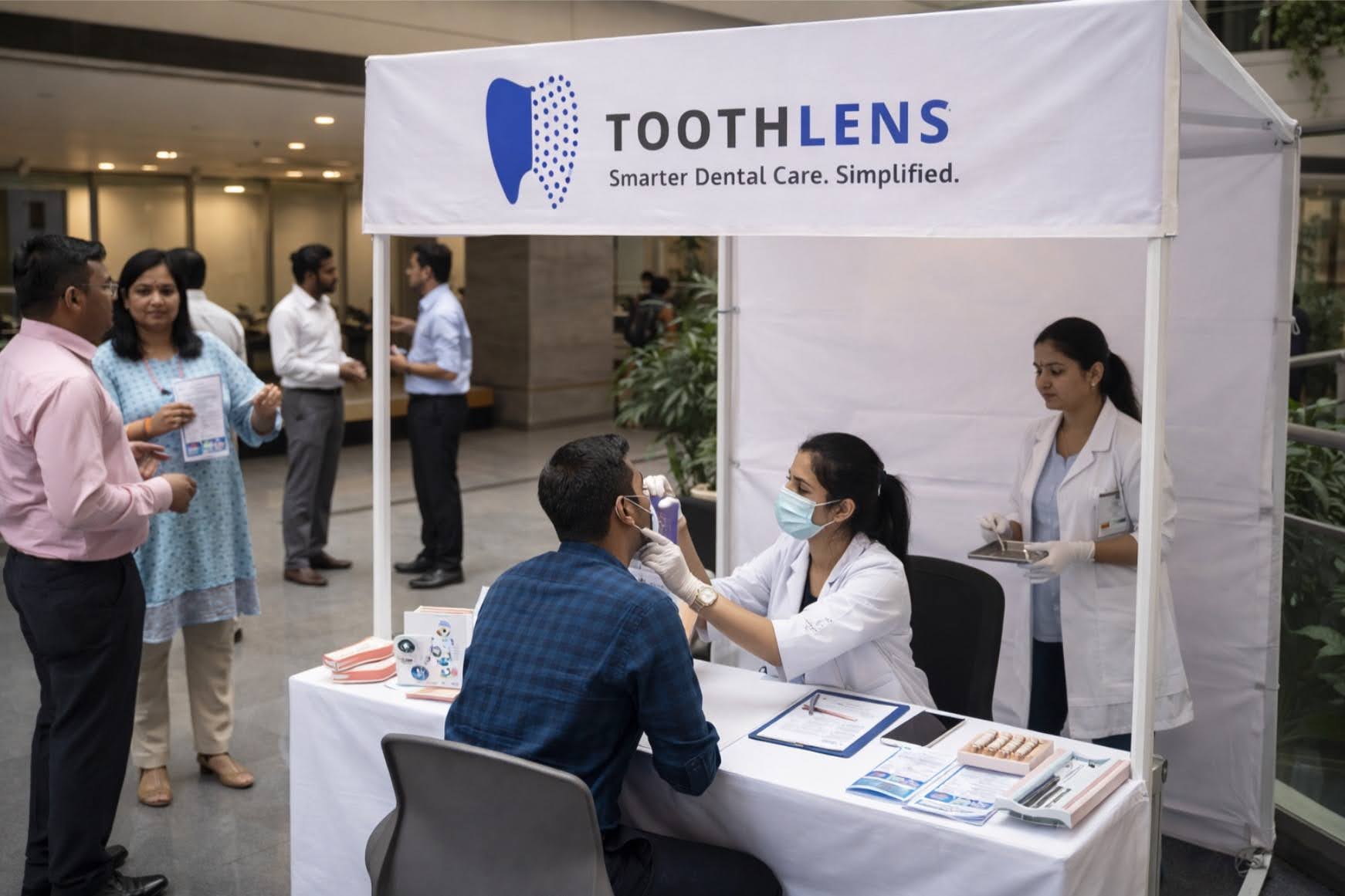
That leaves a gap in employee wellbeing that no policy document fills today. A corporate dental camp is the most practical place for HR to start. A dentist comes to the office, the chairs are set up, and an employee gets checked in 15 minutes between meetings. Done right, it also hands HR real oral health data, the kind that builds the case for adding dental benefits later.
Why the workplace is the right place to screen
The case for screening at the office is stronger than most HR teams realise. A Tata Memorial Hospital team screened 104 employees at a chemical plant in rural Maharashtra. Doctors used a simple visual examination of the mouth, the same kind of check a dental camp offers.
That basic check turned up more than anyone expected. Nearly half the workforce (48%) used tobacco, and 40% of those users had oral precancers that nobody had flagged. After a year of follow-up and tobacco cessation support at the workplace, 80% of those precancers had regressed.
The authors' reasoning is the part HR should note. People without symptoms rarely book a preventive check-up at a hospital. The workplace gives you a stable group you can reach, screen and follow up. It is the same reason dental care gets skipped: employees do not walk in until something hurts. By then, dental pain is already costing focus at the desk and the odd sick day.
What HR needs to look for in a dental camp partner
Not every dental checkup camp in an office drives utilisation. Some are a goodwill gesture with a free toothbrush and nothing after. Before you book a partner, check for these six things.
- Qualified dentists at every chair. Each screening should end with a clinical finding the employee can act on.
- An individual report for each employee. A written screening report and treatment plan guidance give people a concrete reason to book the follow-up visit.
- A clear path to follow-up care. The camp should tell employees where to get treatment and roughly what it will cost. Otherwise findings go nowhere.
- A corporate summary that protects privacy. HR needs aggregate data: how many were screened, common findings, risk distribution. Not individual diagnoses.
- Realistic capacity. A half-day camp should comfortably handle 30 to 40 employees and a full day 70 to 100. Larger offices need several teams running in parallel.
- Low setup burden on your side. A closed, well-lit room, two tables and four chairs should be enough.
The camp playbook: before, during and after
- One week out, start the benefits communication. Send the first email seven days before. Explain what the screening covers, that it takes 10 to 15 minutes, and that results stay confidential. Ask team leads to protect the time.
- On the day, keep the flow moving. The dental team should arrive 15 to 20 minutes early and run its own registration desk. Use a slot schedule so floors move in batches and nobody queues for long.
- At the chair, give people something to act on. Each employee gets an oral examination, a basic consultation, oral hygiene advice and treatment guidance if needed. For tobacco users, this is a natural moment to raise quitting, as the Maharashtra study showed.
- Within a week, read the summary. The corporate report should land with HR. Use it to shape the next awareness session. Then send a reminder nudging employees who need treatment to book it.
- At 30, 60 and 90 days, measure. Track how many screened employees booked a follow-up and how many went on to complete treatment. That is the number that tells you whether the camp worked.
How ToothLens helps
ToothLens already runs this engagement layer for employers across India. We bring the qualified dental team, instruments, disposables and registration desk. You provide the room and support internal communication.
Every employee leaves with a screening report. HR gets a corporate summary covering total employees screened, common dental findings, risk category distribution and recommended preventive measures. That gives you hard numbers for workplace health screening and wellness reporting, not just a photo for the intranet.
Because ToothLens also builds dental benefits, the camp does not have to be a one-off. The screening data shows exactly where dental cover would help your workforce, if you choose to add it. Half-day, full-day and multi-team formats are available for large corporates.